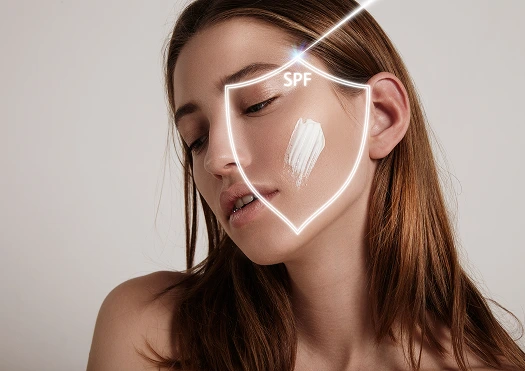
Sun protection isn’t just a summer ritual. It’s a year-round commitment to healthier, younger-looking skin. Yet, many of us still pick sunscreen based on the first bottle on the shelf, a friend’s recommendation, or whatever smells the nicest. But your skin deserves better. Choosing the right SPF is not just about avoiding sunburn; it’s about preventing long-term damage that a skin specialist sees far too often, premature aging, tanning, inflammation, pigmentation, and even skin cancer.
Your skin is your body’s largest organ. It reflects your lifestyle, your environment, and even your diet (something a Dietitian will often emphasize). And while there are countless skin solutions today, sunscreen remains the simplest and most powerful habit you can adopt. But you can only benefit from it if you know how to choose wisely.
Let’s decode the science, and the secrets, behind choosing the perfect SPF for your skin.
We often assume SPF is just a number, the higher, the better. But SPF stands for Sun Protection Factor, and it measures how well your sunscreen protects your skin from UVB rays (the ones that cause sunburn).
For example, SPF 30 blocks about 97% of UVB rays, while SPF 50 blocks around 98%. That’s only a 1% difference, but for someone dealing with sunscreen for pigmentation or sunscreen for melasma, that 1% can be significant because even minimal UV exposure triggers deeper discoloration.
A skin specialist will often explain that SPF doesn’t indicate duration of protection, only strength. No SPF lasts all day. Reapplication is non-negotiable, and your sunscreen's effectiveness depends on how generously and consistently you use it.
UVA rays penetrate deeper into the skin and are responsible for aging, wrinkles, sun spots, and worsening of sunscreen for skin conditions like rosacea or melasma. That’s where broad-spectrum protection steps in.
A broad-spectrum sunscreen protects against both UVA and UVB rays. Most dermatologist recommended sunscreen options fall into this category because protecting only from UVB is like locking your front door but leaving your windows wide open.
When in doubt, a skin specialist is your best guide, they know your skin history, your lifestyle, and what kind of UV exposure you face daily.
Your sunscreen must match your skin type just like your moisturizer or cleanser. Here's how to pick the right one:
Look for sunscreens with hydrating ingredients like hyaluronic acid, ceramides, or glycerine. A creamy, lotion-based formula is ideal.
Gel-based or water-light sunscreens work best. They avoid greasiness and prevent clogged pores.
For people struggling with dark spots, a sunscreen for pigmentation is essential, especially lightweight formulas that don’t irritate acne-prone skin.
This is where mineral sunscreen for sensitive skin becomes the hero. Mineral formulas with zinc oxide or titanium dioxide are less likely to cause reactions. If you need spf for sensitive skin, go mineral every time.
A matte-finish sunscreen works well. It controls the T-zone while keeping the rest of the face comfortable.
A good skin specialist will always ask about your lifestyle, stress levels, and even eating patterns (Dietitian consultations sometimes support this too), all these factors affect how your skin reacts to sun exposure.
The debate is endless, but here’s the simplest explanation:
They absorb UV rays and convert them into heat.
Texture: Lightweight, nearly invisible
Best for: Everyday use, makeup wearers
They sit on top of the skin and reflect UV rays.
Texture: Slightly thicker, sometimes leaves a white cast
Ideal for: Sensitive, reactive, or redness-prone skin
If you’re dealing with melasma, a sunscreen for melasma is usually mineral-based because it limits heat absorption, a major trigger for worsening pigmentation.
Your skin specialist may recommend alternating between the two, depending on your routine.
SPF 30 is the minimum recommended by most experts.
SPF 50 offers stronger protection, especially for those dealing with sunscreen for pigmentation, melasma, or other sunscreen for skin conditions that flare up with light exposure.
You should choose higher SPF if:
Remember, SPF is not about the weather as UV rays are present even on cloudy days.
Even the best sunscreen will fail if applied incorrectly. Here’s what experts recommend:
And yes, even if you're indoors, devices emit blue light, another reason dermatologist recommended sunscreen formulas matter.
Children have thinner, more delicate skin. Choose gentle, fragrance-free mineral formulas. Avoid sprays, as they can be inhaled easily.
A skin specialist will always recommend physical sunscreen for little ones, as their skin barrier isn’t fully developed.
Here are the mistakes experts wish more people avoided:
And the biggest one, not consulting a skin specialist despite recurring tan, redness, or pigmentation.
Sometimes, lifestyle triggers identified by a dietitian can worsen skin sensitivity too — emphasizing how interconnected skin solutions really are.
Sunscreen isn’t a cosmetic product, it’s a daily health essential. The right SPF protects against aging, blemishes, pigmentation, and long-term skin damage. And while trends come and go, one truth stays constant: nothing replaces the guidance of a skin specialist who understands your skin's unique needs.
Choosing the perfect sunscreen isn’t about the highest SPF, it’s about the right formulation, correct usage, and daily consistency. Your skin remembers everything, including how you treat it under the sun.
SPF 30–50 works best for Indian skin, offering reliable sun protection suited to deeper skin tones.
No, you shouldn’t skip sunscreen indoors because UV rays still penetrate windows and damage skin.
Yes, sunscreen is necessary even in cloudy or winter weather because harmful UV rays remain.
